Arimistane Review: OTC Aromatase Inhibitor vs Real AIs
What Arimistane Actually Is
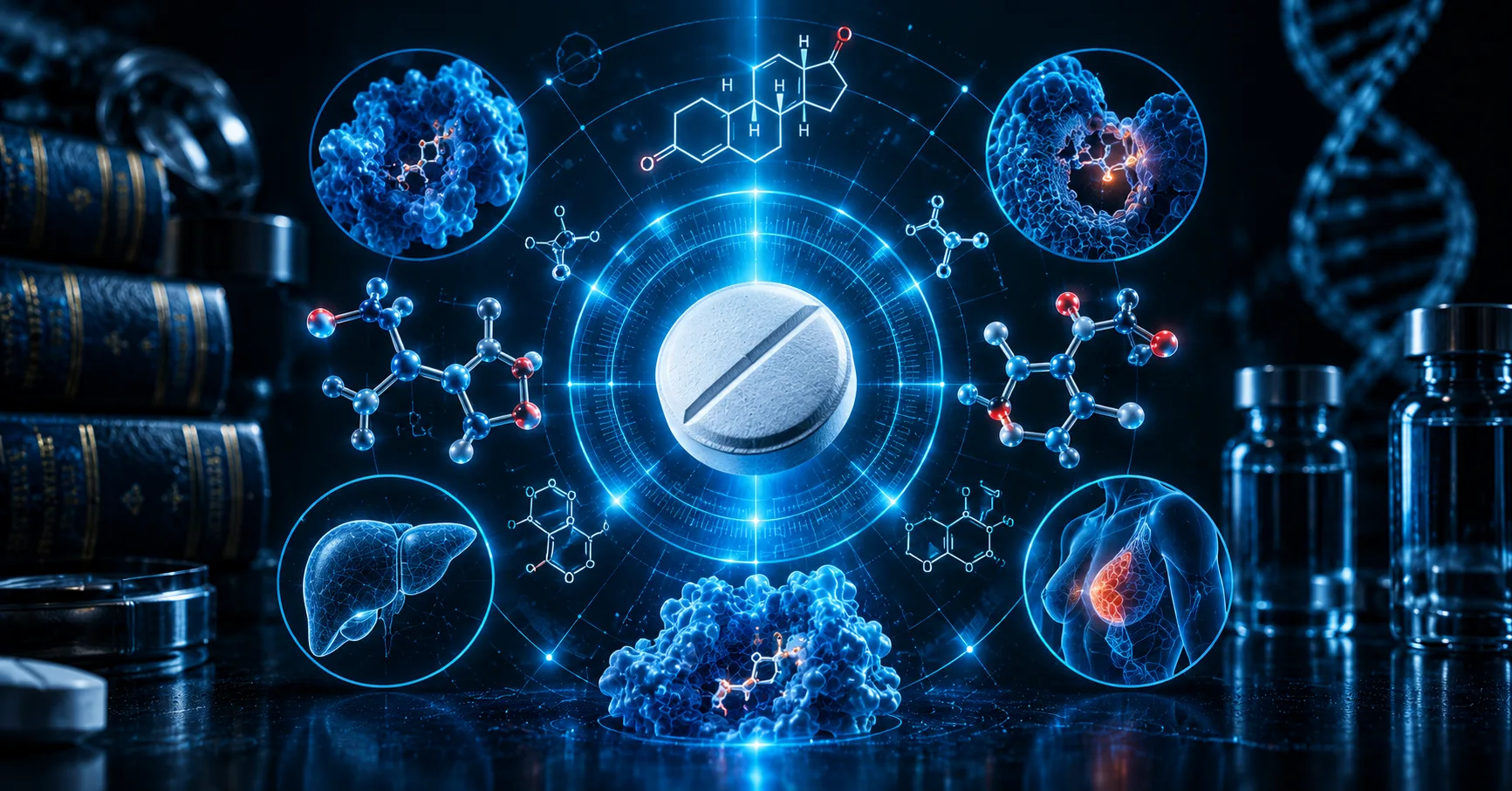
Arimistane is the trade name for androsta-3,5-diene-7,17-dione, a synthetic derivative of a DHEA metabolite. It was sold for years as an over-the-counter "aromatase inhibitor" in PCT stacks and estrogen-control supplements, which is the whole reason it has its own niche: it was the one compound a man could buy without a prescription that inhibited aromatase at all.
Two facts frame everything else in this review. First, the compound is a steroidal aromatase inhibitor in the same broad class as exemestane, and it does suppress estrogen to a measurable degree. Second, the FDA has stated in multiple warning letters that it does not meet the definition of a dietary ingredient and cannot legally be sold in supplements in the US, and WADA bans it at all times as a hormone and metabolic modulator. So the product still turns up on shelves and in "PCT" blends, usually under a rebrand, but its legal footing is gone and its quality control was never there.
This review covers what the compound does, what dose the market uses, what it costs a man in side effects, how it compares with Aromasin, and which men it was ever the right choice for.
Key takeaway: arimistane works, weakly. It is a fraction of the potency of 12.5 mg of exemestane, it is no longer a legal dietary ingredient in the US, and it cannot control estrogen on a steroid cycle. Its only defensible use was mild estrogen support in men not on hormones.
How Arimistane Works
The compound binds the aromatase enzyme through a steroidal mechanism, sitting in the active site where androstenedione would go and blocking the conversion of androgens to estrogens. Some sources describe the binding as irreversible, like exemestane's, but the human pharmacokinetic data that would confirm binding characteristics, suppression duration and enzyme recovery do not exist for this compound the way they do for the prescription AIs. The Aromasin half-life guide shows what that data looks like for a drug that has been through clinical development.
What the preclinical work and community logs agree on is that estrogen falls, modestly, at OTC doses. What nobody has is a controlled human dose-response curve. Bodybuilding use of the compound rests on mechanistic plausibility, in-vitro inhibition data, and forum logs, not on trials.
What Arimistane Is Used For
The market sat at the junction of three use cases.
Natural estrogen support: in men with estradiol slightly high relative to testosterone, older men, men carrying body fat, or genetically heavy aromatisers, a weak OTC inhibitor could nudge the ratio without the potency of a prescription AI. This was the one context where the compound's gentleness was a feature.
OTC PCT after prohormones: after the prohormone era, arimistane became the standard "AI" in over-the-counter PCT stacks. The logic was sound as far as it went: some aromatase inhibition during recovery stops estrogen dominating the picture. The flaw is that an AI is not a PCT. Recovery of LH and FSH needs a SERM, and no OTC blend supplies one.
Bridging between cycles: some men ran it off-cycle to hold a favourable ratio at natural testosterone levels, which suits the potency.
None of these is estrogen control on a testosterone cycle, and the aromatase inhibitors for men guide sets out why that job needs a drug.
Arimistane Dosage
There is no clinical dosing protocol because there were never clinical trials. Products contained 25–75 mg per serving, with labels suggesting one to three servings a day, for a daily total between 25 and 150 mg.
Arimistane doses used in practice
25 mg
Natural men, mild ratio support
Small, may not show on blood work
50 mg
OTC PCT stacks
Noticeable in natural men; nothing on cycle
75–100 mg
Heavy prohormone PCT
Still weaker than 12.5 mg exemestane EOD
100 mg and above
Not recommended
Liver enzyme reports, DHEA suppression
Because the compound was never assayed under pharmaceutical rules, stated content and actual content diverged between brands, and the only way to know what a given dose did was a sensitive estradiol test before and four weeks into use. Most men never drew one, which is why the forum consensus on its strength is so wide.
Arimistane Side Effects
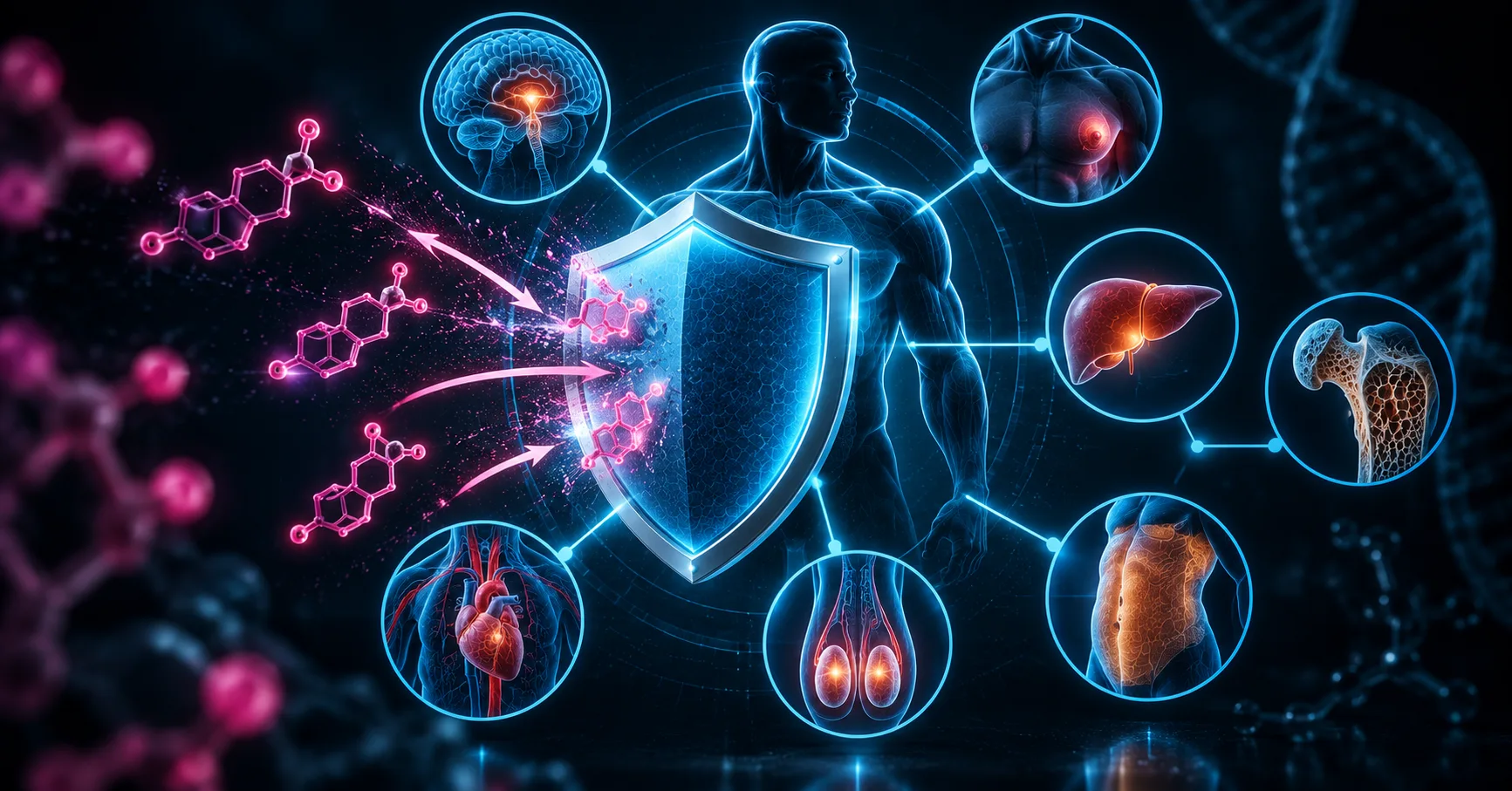
The side effect profile mirrors pharmaceutical AIs in kind, because the mechanism is the same; the threshold is higher because the potency is lower.
- 1Over-suppression: joint pain, libido loss, low mood, fatigue and flat training if estradiol drops below the functional range. Men with low aromatisation or lower testosterone reach this at OTC doses more easily than they expect.
- 2DHEA suppression: the compound sits on the DHEA pathway and some data show it lowers DHEA and its metabolites, which matters for men also supplementing DHEA.
- 3Lipids: like every AI it lowers HDL by removing estrogen's protective effect; the magnitude is smaller than with exemestane but not zero.
- 4Liver: at 100 mg and above, community logs report mild liver enzyme rises. Less common at 25–75 mg.
- 5Product risk: because the ingredient is not legally a dietary ingredient, products carrying it are unregulated by design, and contamination with other designer steroids has been documented in this category.
The how to lower estrogen in men guide covers the blood work that separates a crash from high estrogen, which applies to an OTC inhibitor exactly as it does to a prescription one.
Arimistane vs Aromasin
Arimistane vs Aromasin compared
Class
Steroidal AI, designer steroid
Steroidal AI, irreversible
Legal status (US)
Not a legal dietary ingredient; FDA warning letters
Prescription drug
Potency
Low
High, 85–95% suppression at 25 mg
Human evidence
None controlled
Phase III trials, full PK data
Dosing precision
Variable by brand
Pharmaceutical tablets
On-cycle estrogen control
Insufficient
Effective at 12.5–25 mg EOD
PCT role
OTC stacks only
Preferred bridge alongside a SERM
Cost per month
$30–50
$17–38 with a coupon
The arimistane vs aromasin comparison resolves to one principle: a man managing estrogen on an anabolic steroid cycle cannot get reliable suppression from the OTC compound. At 500 mg of testosterone a week he runs with high estradiol on any OTC dose. The Aromasin vs Arimidex comparison is the relevant decision for that man, and the Aromasin for sale guide shows that a pharmacy prescription with a discount card now costs less per month than the supplement did.
For a natural man wanting mild support, the comparison is less about potency than about access and legality: exemestane needs a prescription, and the OTC option, in principle, cannot be sold.
EstroControl, Estro Guard and the Products That Replaced It
As FDA pressure pushed the ingredient off major retailers, the "estrogen blocker for men" shelf refilled with products that contain no aromatase inhibitor at all. EstroControl from Beyond Alpha, Happy Mammoth's Estro Control for men and Estro Guard are DIM-based formulas with NAC, choline, artichoke, vitamin B6 and selenium: liver and estrogen-metabolism support, not enzyme inhibition. They are legal, they are gentler, and they do less. The best estrogen blocker for men guide ranks them alongside the prescription options.
Products that still list arimistane, or its chemical name androsta-3,5-diene-7,17-dione, are worth three checks before buying.
- 1Third-party testing: an Informed Sport or NSF certificate is rare in this category; its absence means the label is the only evidence of what is inside.
- 2Stacked ingredients: many blends add DHEA, DIM or "test boosters". DHEA alongside a DHEA-derived AI works at cross purposes.
- 3Cycle length: labels cap use at six to eight weeks, and for good reason; long-term estrogen suppression from any AI carries bone density cost.
Who It Was Ever For
It made sense for a narrow group: natural lifters wanting mild estrogen support without a prescription, men finishing a prohormone run who used it alongside a real SERM, and men bridging between cycles at natural testosterone. Even for them, a sensitive estradiol test was the only way to know whether the dose was doing anything.
It never made sense for estrogen management on a testosterone or other aromatising cycle, for PCT after a steroid cycle, where a SERM plus a short exemestane bridge is the protocol, or for any man with confirmed high estradiol who needed the number moved. With the ingredient's legal status gone and pharmacy exemestane cheaper than the supplement, the case for it has narrowed to almost nothing. The Aromasin dosage guide covers what to run instead at every testosterone level.
Arimistane, androsta-3,5-diene-7,17-dione, is a synthetic steroidal aromatase inhibitor derived from a DHEA metabolite. It binds aromatase and reduces conversion of testosterone to estradiol, in the same broad class as exemestane but far weaker and with no controlled human data. It was sold as a supplement until the FDA ruled it is not a legal dietary ingredient.
Not in the US. The FDA has stated in warning letters that arimistane does not meet the definition of a dietary ingredient and cannot lawfully be sold in supplements, and WADA prohibits it at all times. Products still appear under rebrands, but they operate outside the rules and without quality control.
Weakly. At 25–75 mg daily it lowers estrogen measurably in men with natural testosterone, enough to nudge a mildly raised estradiol. It does not control aromatisation from supraphysiological testosterone, so a man on cycle relying on it runs with high estradiol. Only blood work shows what a given product and dose actually did.
Both are steroidal AIs, but exemestane is far more potent, with 85–95% estrogen suppression at 25 mg and full clinical pharmacology behind it. Arimistane at OTC doses gives mild, variable suppression with no trials. Exemestane needs a prescription; arimistane, in principle, cannot be sold at all in the US.
The same as any AI, at a higher threshold: joint pain, libido loss, low mood and fatigue from over-suppressed estrogen, plus lower HDL. It can suppress DHEA, and at 100 mg or more some logs report raised liver enzymes. Because products are unregulated, contamination with other designer steroids is a documented risk.
Not on its own. PCT needs a SERM, tamoxifen or clomiphene, to restart LH and FSH, and arimistane cannot do that. The standard protocol is a SERM plus exemestane at 12.5 mg EOD for the first two to three weeks. Arimistane belonged to OTC prohormone stacks, not to recovery from a real cycle.
Aromasin.org is an independent educational resource. We are not affiliated with Pfizer, any pharmaceutical manufacturer, or healthcare provider. This content is for informational purposes only and does not constitute medical advice.
Editorial
Author
Comments (0)
Be the first to comment on this article.