Natural Aromatase Inhibitors: Foods, Supplements, Limits
What "Natural Aromatase Inhibitor" Actually Means
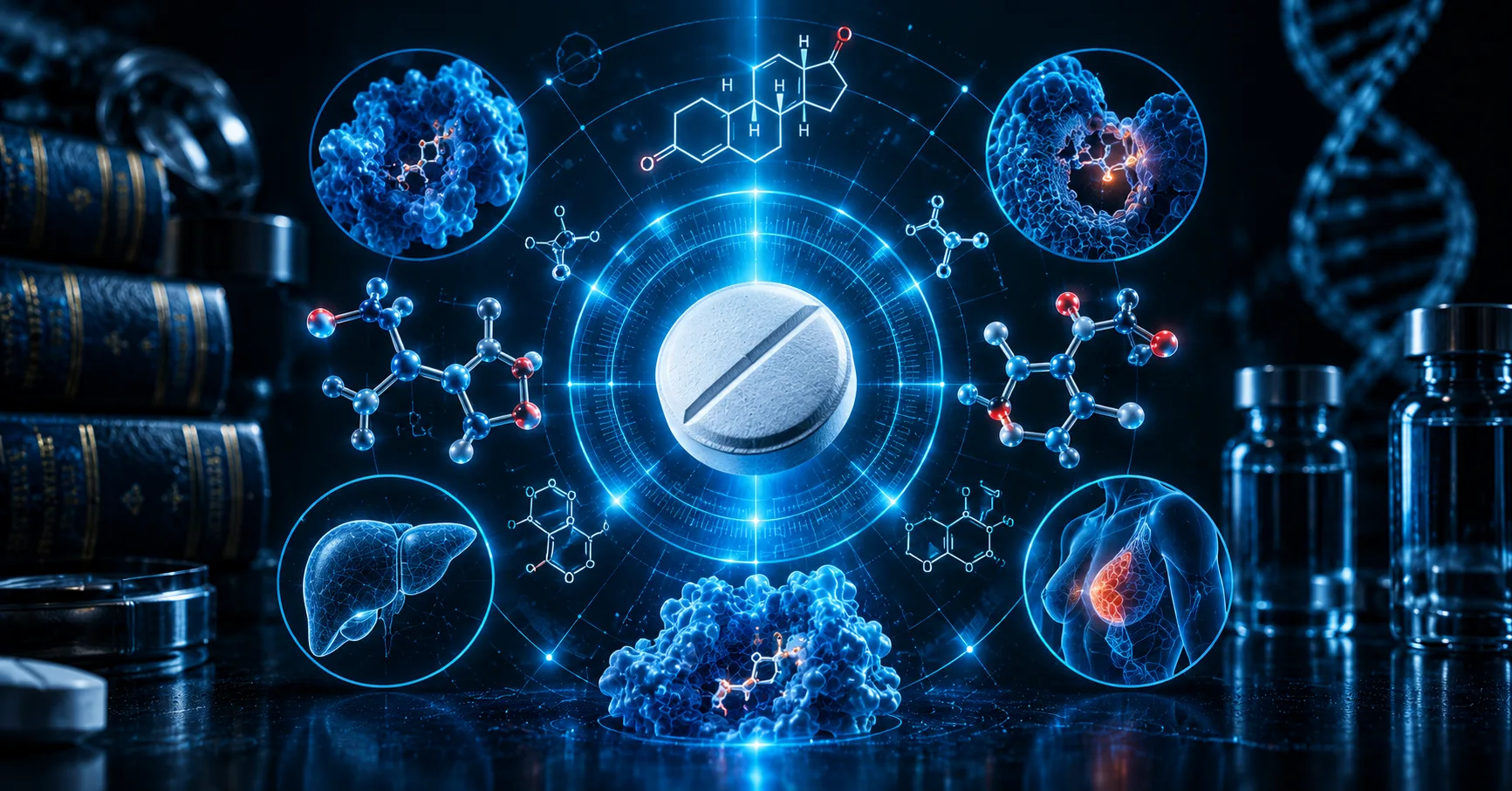
Natural aromatase inhibitors are compounds in foods, plants and supplements that reduce the activity of aromatase, the enzyme that converts testosterone into estradiol, without a prescription. The category is real, and so is the gap between what these compounds do in a test tube and what they do in a man.
Aromatase, CYP19A1, is expressed mainly in adipose tissue, with smaller amounts in liver, brain, bone and testis. In men it produces the majority of circulating estradiol, and more body fat means more enzyme. When a supplement label or a study calls something a natural aromatase inhibitor, the questions that matter are how much inhibition, at what dose, and measured where: in a cell culture, in a rat, or in a human blood test. Most of the literature lives in the first two categories.
This guide covers the compounds with the strongest human evidence, the foods that contain them, the strongest natural aromatase inhibitor by the evidence rather than by marketing, how natural options compare with Aromasin and Arimidex, and where they are enough and where they are not.
Key takeaway: zinc in a deficient man and DIM from cruciferous vegetables have measurable effects on estrogen in humans. Everything else on the supplement shelf is a cell-culture result that does not survive digestion. None of it controls estrogen on a cycle.
The Most Studied Natural Aromatase Inhibitors
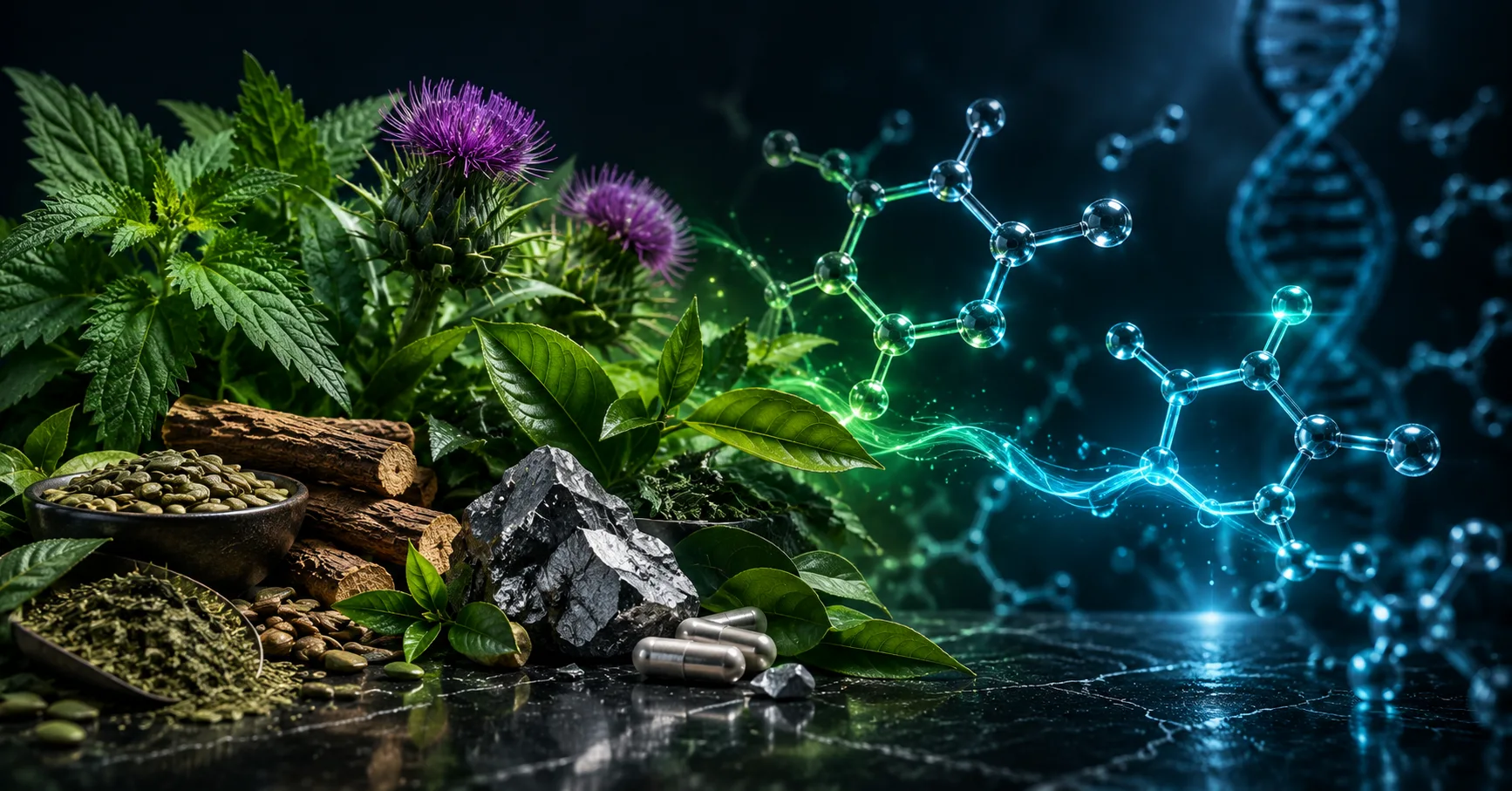
DIM (diindolylmethane) forms in the gut from indole-3-carbinol in cruciferous vegetables and is the most studied compound in this category for human hormone metabolism. Its mechanism is not direct aromatase inhibition. DIM shifts estrogen breakdown toward the weaker 2-hydroxyestrone metabolite and away from the more active 16-alpha-hydroxyestrone, so it changes how estrogen is processed rather than how much is made. Human studies at 200–400 mg daily show measurable shifts in metabolite ratios; total serum estradiol barely moves in men with normal testosterone.
Zinc has the most direct human evidence. In zinc-deficient men, supplementation lowers aromatase activity and raises the testosterone-to-estrogen ratio, because the enzyme's regulation depends partly on zinc status. The limit is that the effect belongs to correcting deficiency. A man who is already replete gains little further inhibition from more zinc; 15–30 mg of elemental zinc daily restores normal regulation and does not suppress the enzyme below baseline.
Quercetin, from onions, apples and capers, inhibits aromatase strongly in cell culture, strongly enough to have been studied as a drug lead. It is poorly absorbed, and plasma levels after oral doses sit far below the concentrations that work in vitro. Enhanced formulations such as quercetin phytosome improve absorption, but human data on estrogen in men remain thin.
Resveratrol, from red grapes, inhibits aromatase in cells and animals. In humans it is metabolised within minutes and results on estradiol are inconsistent at best.
Luteolin, in thyme, celery and parsley, is among the most potent inhibitors in vitro, close to pharmaceutical AIs in some assays. Dietary intake cannot reach the plasma levels that produce the effect.
White button mushrooms contain conjugated linoleic acid and polyphenols that inhibited aromatase in studies on human breast tissue, which makes them one of the more credible entries because the tissue was human rather than a cell line. The effect at dietary amounts is modest but real.
What Is the Strongest Natural Aromatase Inhibitor?
Measured in a test tube, the strongest natural aromatase inhibitor is luteolin or chrysin, both of which reach inhibition constants in the same range as early pharmaceutical AIs. Measured in a man, neither registers, because chrysin is barely absorbed and luteolin never reaches the plasma concentration that the assay used.
Measured by change in a human blood test, the strongest natural aromatase inhibitor is zinc in a zinc-deficient man, followed by DIM for estrogen metabolism. Arimistane, sold as an OTC "aromatase inhibitor" at 25–75 mg, is a synthetic steroid derivative rather than a food compound; it produces weak but real inhibition, at a fraction of 12.5 mg of exemestane, with thin human data and potency that varies by brand.
Natural aromatase inhibitors ranked by human evidence
Zinc (if deficient)
Low
Real, ratio improves
15–30 mg elemental daily
DIM
Low
Metabolite shift, E2 stable
200–400 mg daily
White button mushroom
Moderate
Modest, human tissue data
100 g daily
Arimistane (OTC)
Moderate
Weak, variable by brand
25–75 mg
Quercetin
High
Negligible, poor absorption
Not established
Resveratrol
High
Inconsistent
Not established
Luteolin, chrysin
Very high
None measurable
Not achievable orally
The best estrogen blocker for men guide covers the branded OTC products, EstroControl, Estro Guard and the arimistane blends, and what their labels actually contain.
Aromatase Inhibiting Foods Worth Eating
The foods that supply meaningful amounts of natural aromatase inhibitors, and how much of them matters.
Aromatase inhibiting foods and their active compounds
Broccoli, cauliflower, kale, cabbage
Indole-3-carbinol → DIM
200–300 g, lightly cooked
Shifts estrogen metabolism
Oysters, red meat, pumpkin seeds
Zinc
Meets 11 mg RDA
Normalises aromatase regulation
White button mushrooms
CLA, polyphenols
100 g
Modest direct inhibition
Onions, apples
Quercetin
Regular use
Minor; poor absorption
Red grapes, blueberries
Resveratrol, flavonoids
Regular use
Minor
Green tea
EGCG
2–3 cups
Minor; in vitro mostly
Cooking degrades indole-3-carbinol, so cruciferous vegetables are best raw or lightly steamed. Oysters carry more zinc per serving than any other food; for men who do not eat seafood, red meat is the practical source. Together these supply the food equivalent of a low-dose DIM plus zinc protocol, which is the most a diet can do, and it is enough for a natural man whose estradiol sits slightly high.
A diet that supports estrogen management: cruciferous vegetables daily, zinc from meat or oysters, mushrooms and berries regularly. It optimises a natural man's baseline; it does not replace a pharmaceutical AI on cycle.
The In Vitro vs Human Gap
The single most useful thing to understand about this category is why in-vitro potency so rarely becomes a human result. In cell culture, flavonoids and polyphenols inhibit aromatase at concentrations that would be impressive if a man's blood could reach them. It cannot. The concentrations used in cell studies are typically 10–100 times higher than what appears in plasma after oral intake, even at supplement doses, because of poor absorption, rapid liver metabolism and fast clearance.
Quercetin is the clean example. Its half-maximal inhibitory concentration in vitro is pharmacologically meaningful; oral quercetin produces plasma levels well below it in nearly every human study. This is why headlines claiming a natural compound "blocks aromatase as well as drugs" are simultaneously true and irrelevant. The natural compounds whose effects survive into human blood tests are the ones acting through a different route: zinc by correcting a deficiency that was raising aromatase, and DIM by changing estrogen metabolism rather than blocking the enzyme.
Natural Aromatase Inhibitors vs Aromasin and Arimidex
Natural inhibitors and pharmaceutical AIs are not competing for the same job. They work at different orders of magnitude in different men.
Natural vs pharmaceutical aromatase inhibitors
Effect on estradiol
Modest to none
50–95%, dose-controllable
Prescription
No
Yes
Dosing to blood work
Not practical
Standard
Fit for a steroid cycle
No
Yes
Fit for a natural man
Yes
Usually excessive
Risk of crashing estrogen
Negligible
Real if overdosed
A natural lifter who wants a better testosterone-to-estrogen ratio can use DIM, correct zinc, lose body fat and cut alcohol, and get a real if modest improvement with no prescription, no blood-work-driven titration and no risk of a crash. A man on 500 mg of testosterone a week cannot get adequate estrogen control from any food or supplement; the conversion rate at that dose overwhelms them entirely, and the Aromasin dosage guide is the relevant page. The aromatase inhibitors for men guide sets out who needs a drug at all.
Lifestyle: The Natural Aromatase Inhibitors That Work Best
The most effective natural inhibitors are not in a capsule. They are the changes that reduce the enzyme itself.
- 1Body fat: aromatase is concentrated in adipose tissue, and dropping from 25% to 15% body fat lowers aromatase activity more than any supplement. It is the largest modifiable driver of aromatisation in most men.
- 2Alcohol: raises aromatase activity and slows hepatic estrogen clearance. Cutting from 7–14 drinks a week to near zero produces measurable change within four to six weeks.
- 3Sleep: testosterone is made mostly at night; chronic sleep under six hours lowers it and tilts the ratio toward estrogen.
- 4Resistance training: raises testosterone, lowers body fat over time and acutely lowers SHBG.
The how to lower estrogen in men guide sets these out as a sequence, with the blood test that shows whether they are working.
When Natural Options Are Enough, and When They Are Not
Food-based, supplement-based and lifestyle-based natural inhibitors are effective at the level of natural male hormone optimisation. A man with testosterone in the normal range and estradiol at the upper end who wants a better ratio, healthier estrogen metabolism and bone and cardiovascular protection has real options that need no prescription.
They are not adequate for estrogen control during anabolic steroid use. The aromatisation load from supraphysiological testosterone is orders of magnitude beyond what DIM, zinc or any food compound can blunt, and relying on them on cycle means running with uncontrolled estradiol. On TRT the picture sits between the two: most men need no AI of any kind, and those who do usually need a small pharmaceutical dose rather than a supplement. The Aromasin vs Arimidex comparison covers the drug choice for the men who reach that point.
By human evidence: zinc in men who are deficient, DIM from cruciferous vegetables for estrogen metabolism, and white button mushrooms, which showed inhibition in human tissue studies. Beyond supplements, losing body fat is the most effective natural approach, because adipose tissue is where most male aromatase lives.
In a test tube, luteolin and chrysin rival early pharmaceutical AIs. In a man, neither registers, because they are barely absorbed. Measured by a real change in blood work, the strongest is zinc in a zinc-deficient man, then DIM. Arimistane, an OTC synthetic, gives weak but measurable inhibition.
Modestly. Cruciferous vegetables, zinc-rich meat and oysters, mushrooms, onions and berries produce real but small effects on estrogen metabolism in natural men. The gap between in-vitro potency and human plasma levels is large for flavonoids. Diet is useful for baseline hormone health and useless for estrogen control on a steroid cycle.
No. No food or supplement provides enough suppression to manage aromatisation from supraphysiological testosterone. A man on 500 mg a week relying on DIM and broccoli runs with high estradiol. Only a pharmaceutical AI dosed to blood work, exemestane or anastrozole, controls estrogen on cycle.
Lose body fat, since aromatase is concentrated in fat, then cut alcohol, which raises aromatase and slows estrogen clearance. After that, correct zinc, fix sleep, train with weights and eat cruciferous vegetables daily. The combination produces more change than any single supplement, and a sensitive estradiol test shows whether it worked.
Yes, with the best human evidence in the category. In zinc-deficient men, correcting the deficiency lowers aromatase activity and improves the testosterone-to-estrogen ratio. In men already replete, extra zinc adds little. A daily 15–30 mg of elemental zinc suits men who rarely eat oysters, red meat or pumpkin seeds.
Aromasin.org is an independent educational resource. We are not affiliated with Pfizer, any pharmaceutical manufacturer, or healthcare provider. This content is for informational purposes only and does not constitute medical advice.
Editorial
Author
Comments (0)
Be the first to comment on this article.