
Gyno from Steroids: Causes, Prevention and Reversal
Why Steroids Cause Gyno in the First Place
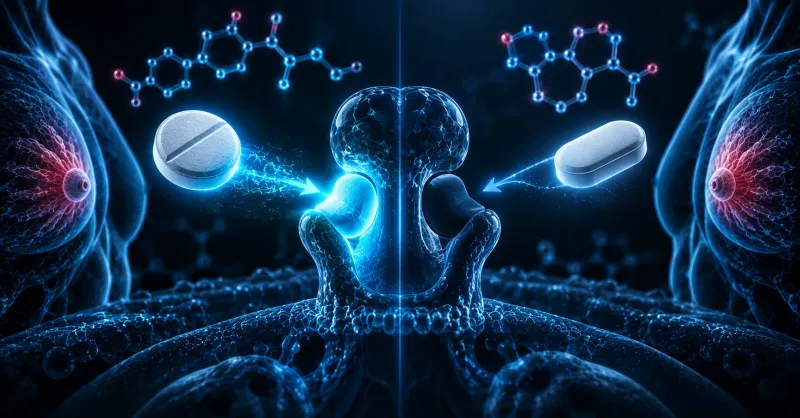
Gyno from steroids is the most predictable side effect in the entire anabolic catalogue, and it happens for one reason: the male breast gland grows when estrogen activity rises relative to androgen activity, and most steroid cycles do exactly that. Testosterone and several other compounds are substrates for the aromatase enzyme, which converts a fraction of every milligram into estradiol. At a physiological 7 mg per day of testosterone that fraction is harmless. At 500 mg per week it produces estradiol levels that would be high for a woman in mid-cycle.
Surveys of anabolic steroid users put the lifetime incidence of gynecomastia somewhere between a third and a half, and it is the single most common reason steroid users end up in a plastic surgeon's office. It is also almost entirely preventable, because unlike most side effects it has a lab value you can watch, estradiol, and a defined window in which it can be reversed. This guide covers which compounds cause it, how to keep it from starting, and what actually works when it has already begun. For recognising the early signs, the gyno vs chest fat guide has the self-check.
Gyno from steroids is a glandular response to the estrogen-to-androgen ratio. Fix the ratio early and the gland stops growing; leave it for a year and it becomes permanent tissue.
Which Steroids Cause Gyno and How
Not every compound works through the same pathway, and this matters for prevention because an aromatase inhibitor only helps with one of them.
Gyno risk by compound class
Testosterone (all esters)
Yes, dose-dependent
,
High at 300+ mg/week
Dianabol (methandrostenolone)
Yes, to methylestradiol
,
High, fast onset
Nandrolone (Deca), trenbolone
Minimal
Progesterone receptor, prolactin
Moderate, high
Anadrol (oxymetholone)
No
Direct estrogenic activity
Moderate; AI does not help
Anavar, Winstrol, Primobolan, Masteron
No
None
Very low alone
Testosterone and Dianabol are the classic aromatizing compounds. Estradiol rises in proportion to dose, and the gland responds to estradiol. An aromatase inhibitor addresses this directly.
Nandrolone and trenbolone are 19-nor compounds that barely aromatize but stimulate the progesterone receptor and, in many users, raise prolactin. Progesterone amplifies estrogen's effect on breast tissue and prolactin stimulates the gland on its own, so 19-nor gyno can develop with estradiol in range. The fix is different: control estradiol so there is less for progesterone to amplify, and manage prolactin if it is elevated, typically with cabergoline under medical supervision.
Anadrol is the outlier. It does not convert to estradiol but appears to activate the estrogen receptor directly, which means an aromatase inhibitor does nothing and only a SERM protects the gland.
The compounds that do not aromatize, Anavar, Winstrol, Primobolan, Masteron, carry near-zero gyno risk alone. The catch is that almost nobody runs them alone; stacked on a testosterone base, the testosterone still aromatizes, and cutting compounds that lower body fat can unmask an existing gland.
The Timeline: How Fast Gyno from Steroids Develops
Estradiol begins rising within days of the first testosterone injection and reaches a plateau by roughly week three to four as blood levels of the ester stabilise. Breast tissue responds after a lag. Most users who develop steroid gyno notice the first symptoms, nipple itching, sensitivity, a puffy look, between weeks three and six of a cycle, and a palpable lump one to three weeks after that.
Dianabol is faster. Because it is an oral with no ester and converts to a potent estrogen, symptoms can appear inside two weeks. Trenbolone and nandrolone gyno often appears later, sometimes after a cycle has ended, because progesterone-mediated changes take longer to manifest.
The critical clinical fact is the phase structure. For roughly the first 6 to 12 months the gland is in a proliferative phase: actively growing, tender, and made of ductal tissue that responds to hormonal signals. After that it enters the fibrotic phase, in which the ducts are replaced by dense collagen. A SERM shrinks proliferative tissue and does almost nothing to fibrotic tissue. Every decision about reversal depends on which side of that line you are on.
Preventing Gyno from Steroids: the Protocol That Works
Prevention has four parts, and skipping any of them is how gyno steroids stories start.
The first is matching estrogen control to the compound. On an aromatizing base, an aromatase inhibitor scaled to the testosterone dose keeps estradiol in range; the working target on cycle is 20 to 40 pg/mL on an LC/MS assay. Exemestane at 12.5 mg every other day is a common starting point at 500 mg of testosterone per week, adjusted from blood work. The Aromasin dosage guide has a table by testosterone dose. On a 19-nor or Anadrol, add awareness of the second pathway.
The second is blood work at the right time. A single estradiol test at week four to five, once levels have plateaued, tells you whether the AI dose is right before the gland has had time to respond. Testing at week one is useless; testing at week ten is often too late. Use an LC/MS or equivalent sensitive assay, standard immunoassays can overread estradiol in men and lead to over-suppression.
The third is having a SERM on hand before the cycle starts. Tamoxifen or raloxifene works at the breast receptor regardless of what estradiol is doing, which makes it the emergency tool for the first tingling nipple. The estrogen blocker guide explains the AI-versus-SERM distinction. Which of the two to keep on hand is compared in tamoxifen vs raloxifene for gyno.
The fourth is not crashing estrogen out of fear. Zero estradiol does not give zero gyno risk; it gives joint pain, dead libido, flat mood and a lipid profile that gets worse the longer it lasts. Men who nuke their estrogen with 25 mg of exemestane daily to "be safe" trade a preventable side effect for a guaranteed one.
The prevention checklist in order:
- 1Pick an AI dose scaled to the aromatizing compound and dose, not a fixed number from a forum
- 2Test estradiol (LC/MS) at week four to five and adjust; retest two weeks after any change
- 3Keep a SERM in the drawer from day one and start it at the first sign of nipple sensitivity
- 4Check prolactin on any 19-nor cycle; treat elevation rather than adding more AI
- 5Never run estradiol to zero, the target is a range, not the floor
Reversing Steroid Gyno That Has Already Started
If you have caught it early, tender, growing, less than a few months old, the outlook is good. The first step is fixing the cause: bring estradiol back into range, check prolactin if the cycle includes a 19-nor, and if the cycle is nearly done, finish it rather than adding compounds. The second is a SERM, which requires a physician in most countries. Tamoxifen at 10 to 20 mg daily for four to eight weeks reverses or substantially reduces early gynecomastia in the large majority of cases; raloxifene at 60 mg daily performs at least as well in the published comparisons, with less effect on IGF-1 and lipids. Both take two to four weeks to show visible change.
An aromatase inhibitor alone is a weaker reversal tool. It stops the gland receiving new estrogen but does not block the receptor, and in the prostate-cancer literature, where drug-induced gyno is common, gynecomastia developed in 10% of men on tamoxifen, 51% on anastrozole and 73% with neither (Boccardo, Journal of Clinical Oncology 2005). Use the AI to fix the ratio and the SERM to fix the gland.
If the tissue is firm, painless, unchanged for many months and survived a previous SERM course, it is fibrotic. No medication reverses collagen. The options are acceptance or surgical excision, a subcutaneous mastectomy through a small incision at the edge of the areola, often combined with liposuction of the surrounding fat, typically done as a day case with two to three weeks of restricted training afterward. Surgery is definitive; the gland does not grow back, though a new gland can form if the hormonal trigger is repeated. The timeline for when gyno stops being reversible is covered in does gyno go away.
Reversal options by stage
First 1 to 3 months, tender
Fix E2, SERM (tamoxifen 10 to 20 mg or raloxifene 60 mg)
AI alone, supplements
3 to 12 months, still soft
SERM course, may be partial
Waiting it out
Over 12 months, firm
Surgical excision
Any medication, "gyno pills"
Common Mistakes That Turn a Minor Problem into a Permanent One
The most expensive mistake is waiting. A nipple that itched in week four and hurt in week six will usually be a firm lump by month four. Men wait because they hope it will resolve, because they do not want to add a drug, or because they finished the cycle and assume the gland will regress with estradiol. It sometimes does, partially. Often it does not.
The second is the wrong tool. Adding more AI to an Anadrol cycle, or to a trenbolone cycle with high prolactin, does nothing to the gland and produces a crash. Reading the compound table above before the cycle prevents this.
The third is over-the-counter "gyno pills" and "estrogen blockers", DIM, chrysin, arimistane blends, used as if they were tamoxifen. None has evidence for reversing glandular tissue. The arimistane review covers why the OTC category is not a substitute.
The fourth is running PCT without thinking about the gland. Clomiphene and tamoxifen in PCT both occupy the breast estrogen receptor, which is protective; but hCG in PCT raises estradiol via testicular aromatase, and men who stop their AI the day the cycle ends while running hCG for three weeks can develop gyno in PCT. Taper the AI with the hCG rather than dropping it.
Gyno from steroids is, in the end, a management problem with a clear solution. Watch the number, act on the first symptom, and use the right drug for the right pathway.
Frequently Asked Questions
Surveys of anabolic steroid users report gynecomastia in roughly one-third to one-half of users at some point, making it the most frequent reason steroid users seek plastic surgery. The rate is highest on aromatizing compounds like testosterone and Dianabol, and lowest on non-aromatizing orals run without a testosterone base.
Occasionally, if it is caught in the first weeks and the hormonal cause is removed quickly, early tissue can regress partially. Once the gland has been growing for several months it rarely resolves without a SERM, and after about a year it becomes fibrotic and only responds to surgery.
Anavar, Winstrol, Primobolan and Masteron do not aromatize and carry very low gyno risk on their own. The risk returns when they are stacked with a testosterone base, which still converts to estradiol, and lean-cutting compounds can reveal an existing gland that was hidden by body fat.
Partially at best. An AI lowers the estradiol reaching the gland but does not block the receptor. In a prostate-cancer trial, gynecomastia developed in 10% of men on tamoxifen versus 51% on anastrozole. Use the AI to correct estradiol and a SERM to treat the gland itself.
Itching, burning or heightened sensitivity of the nipple, usually between weeks three and six of an aromatizing cycle, followed by a puffy nipple and then a small hard lump directly behind the areola. Tenderness is the key early sign, because chest fat is never sore.
Yes. Nandrolone and trenbolone are 19-nor compounds that stimulate the progesterone receptor and often raise prolactin, both of which promote glandular growth even when estradiol is in range. Prevention on these cycles means checking prolactin, controlling estradiol so there is less for progesterone to amplify, and keeping a SERM available.
Aromasin.org is an independent educational resource. We are not affiliated with Pfizer, any pharmaceutical manufacturer, or healthcare provider. This content is for informational purposes only and does not constitute medical advice. Images on this site are illustrative artwork made for editorial purposes; they do not show real products, packaging or labels and are not an advertisement or an offer to sell.
Editorial
Author
Comments (0)
Be the first to comment on this article.